

The CEnTR* System

CEnTR*MAP

Community-engaged work is inherently relational and shaped by local knowledge, but institutional systems represent it in fragments. A list of outputs. A grant report. A number of people served.

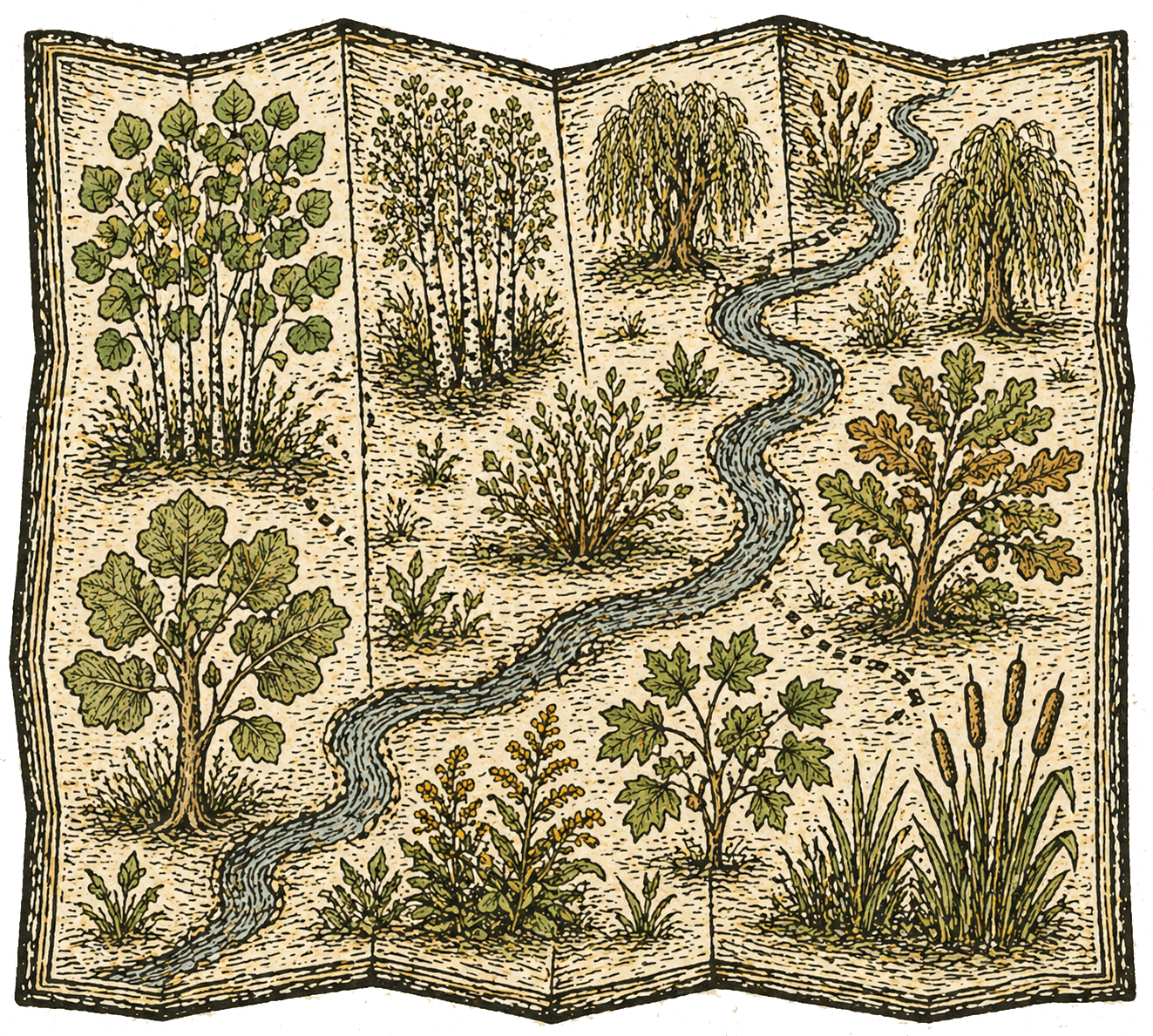
CEnTR*MAP starts somewhere different. Not with what communities lack, but with what they have. It maps, reveals, and models the relationships between community assets, surfacing how engagement ecosystems actually function and evolve over time.

Botanical illustration of goldenrod

CEnTR*MAP transforms what gets mapped, how relationships are understood, and what coordination becomes possible by centering community ecosystems rather than institutional categories.

CEnTR*MAP is grounded in Asset-Based Community Development, Community Cultural Wealth, and ecological systems thinking. These aren't rhetorical commitments, they are structural features of the platform that determine what gets revealed and how. That includes formal assets and informal ones: lived experience, community knowledge, informal leadership, cultural practices, and historical heritage that conventional systems never surface.

The platform also supports a reflective function: identifying deficit-oriented language in existing documentation and supporting more accurate, strengths-based representation. And because mapping is most powerful when communities and institutions build it together, CEnTR*MAP supports participatory processes, enabling co-creation and validation of shared ecosystem representations, rather than imposing a top-down view.


Theoretical Foundation

Three frameworks. One coherent orientation toward community ecosystems.

Seedling
Foundation

Asset-Based Community Development

ABCD inverts the standard question. Instead of asking what a community lacks, it asks what it has. This reorientation is not merely rhetorical, it changes what researchers look for, what partners are asked to contribute, and what counts as a successful outcome. CEnTR*MAP's entire capital taxonomy and ecological systems model are built on this foundation, orienting the platform toward coordination, partnership, and strategic investment rather than needs-based reporting.

Oak tree
Capital Taxonomy

Community Cultural Wealth

Yosso's Community Cultural Wealth (2005) expands the concept of capital beyond economic resources to encompass the full range of knowledge, skills, and networks that communities possess and draw upon: aspirational, linguistic, familial, social, navigational, and resistance capital. CEnTR*MAP structures its asset taxonomy around this framework, ensuring that what gets mapped includes informal and lived assets — community knowledge, trust, informal leadership, and historical heritage — not just the formal resources institutional systems typically recognize.

Ripple
Systems Model

Ecological Systems Thinking

Drawn from Bronfenbrenner's ecological framework, CEnTR*MAP organizes its capital taxonomy within a nested systems model, situating assets from the deeply personal to the broadly historical. Crucially, this framework centers relationships as a primary unit of analysis: trust, collaboration, and influence are not secondary features but the connective tissue of the ecosystem. Engaged work is understood not as a transaction between an institution and a community, but as something embedded in layers of relationship, history, and structure that shape what is possible and what persists.

1
Narrative-first data ingestion

Narrative-first data ingestion

Processes transcripts, reports, and memos without requiring users to manually structure inputs, treating existing narrative as the living starting point for ecosystem analysis.

2
Relationship-centered capital taxonomy

Relationship-centered capital taxonomy

Drawn from Community Cultural Wealth and ABCD frameworks, mapping assets and the connections between them across Microsystem, Mesosystem, Exosystem, and Macro-/Chronosystem levels, shifting from inventories to networked ecosystems.

3
Participatory asset-mapping framework

Participatory asset-mapping framework

Surfaces community strengths, from familial and linguistic capital to resistance capital and historical heritage, through a co-created process that enables communities and institutions to validate shared representations of their ecosystem.

4
Language support tool

Language support tool

Identifies deficit-oriented framing and suggests asset-based alternatives, functioning as a reflective aid rather than a prescriptive editor, supporting researchers and students in examining how they represent community partners.

AI-assisted processes scaffold interpretation, they do not replace it. The system surfaces relationships, connections, and gaps while communities and researchers maintain control over how their ecosystem is represented and understood.

What Becomes Possible

From fragmented representation to a living, relationship-centered understanding of community ecosystems.

Full-Spectrum Ecosystem Mapping

Reveal the full range of community capital that conventional systems never surface — familial and linguistic capital, resistance capital, informal leadership, lived experience, historical heritage — and map the relationships between them to show how the ecosystem actually functions.

Deficit Language Audit

Identify where existing documentation frames communities in terms of need rather than strength, and support revision toward more accurate, equitable representation, giving researchers and students a tool to examine and improve how they position community partners.

Equitable Impact Narratives

Produce asset-centered reports for funders, accreditors, and leadership that position community contributions accurately — not as a backdrop to institutional work, but as its foundation — supporting strategic coordination and guiding future investment.

Longitudinal Ecosystem Tracking

Maintain a living, continuously evolving record of community assets and relationships over time, giving institutions and partners a shared picture of how ecosystems develop, where alignment is strong, and where new coordination is needed.

The shared vocabulary is the infrastructure. Not a reporting system, a living framework for understanding that reveals how community ecosystems function and evolve, across institutions and over time.

Ready to map what communities actually bring, and how their ecosystems work?

CEnTR*MAP is in active development. If your institution is working to move from deficit-based documentation to living, relationship-centered ecosystem mapping, we'd like to talk about what that could look like in your context.